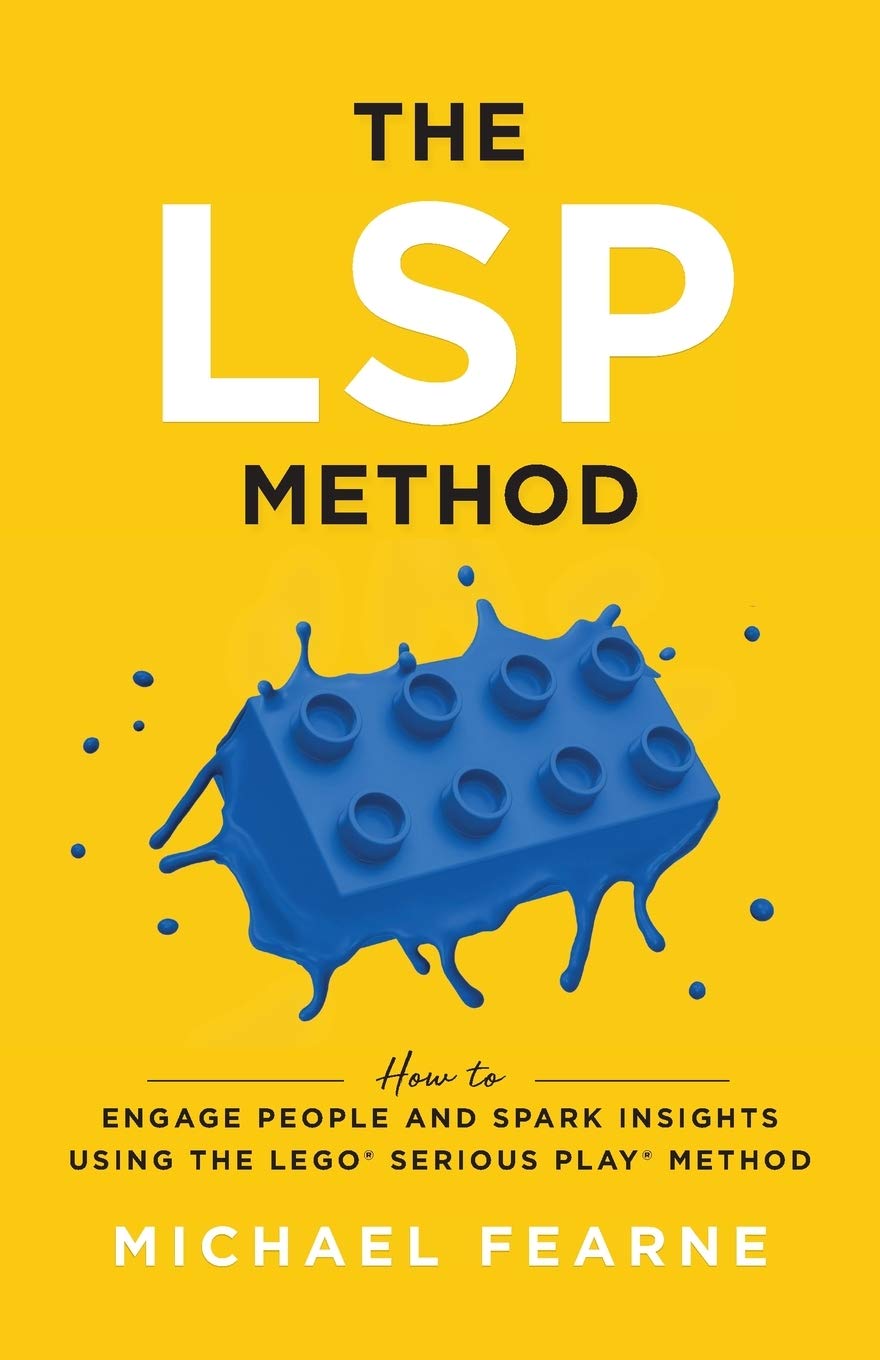
I have just finished reading The LSP method, using the LEGO Serious Play to facilitate meetings. From a young age LEGO had always been one of the main toys in my life and now with children, it is coming back again. The idea of the LEGO Serious Play method has been intriguing me for a while. I have seen local meetups I’ve wanted to attend, but as these were deep in COVID, the idea of being in close proximity to others and sharing LEGO concerned me a little. Then I found “The LSP method” by Michael Fearne in my kindle daily deals.
The book is fairly short and easy to read. It is split into three parts, the foundations, how and why the method works, which is available for free on the LSP method website. The second section goes though how you would run an LSP session, giving step-by-step examples. Then the final section talks about how you can customize the sessions, including some of the science behind why LSP works.
For those who have played with LEGO before or watched the show “LEGO masters” (Australian version is still the best), LEGO models have always been a literal representation of the real world, a building, a vehicle, a mystical creature. But with the LEGO Serious play method we need to build using metaphors and stories. I love the example used in the book using just a minifigure and some grass.
Using just the grass we can talk about the environment around us, or sustainability. But if we put the grass the minifigures head, is his mind being blown with new ideas? Is head exploding from the stress? The minifigure sits on-top of the grass, are they navigating a tricky situation? In front of the minifigure we can symbolise someone barking out orders, representing communication style. With just two parts we can create a number of stories, and this is where the magic begins.
As the book delves into the LEGO Serious Play method we get taken through the idea of building in number of rounds. Each of these rounds follows a similar structure. We start with a question that we want to explore. We then use the LEGO to build out an answer to this question. Next we spend so time in small groups explaining our build and walking through it’s story, explaining how that captures the problem/solutions. Then we reflect on what the group has produced, capturing any outcomes. Each of these sessions takes about 30 minutes.
This structure reminded me of the Liberating Structure 1-2-4-All. Here people work alone to generate ideas, then pair up to share ideas. The pairs join other pairs and each person explains their initial pairs thoughts to the second pair where they can combine ideas and expand on what has been discussed, before finally reporting back to the whole group. In LSP we are working along to build, sharing with a group. Then if we have a large session the groups are sharing back to the room as whole.
After an initial round of building we can go into further rounds delving into additional questions, or starting to combine the individual builds into a group build taking parts from each individual, or produce a landscape linking the individual builds into a more complex scene. Again these sessions follow the steps of presenting a question, building, story telling/reflecting on build, capturing important solutions/discussions for action later, while still trying to keep to the same 30-minute timebox.
LEGO Serious Play sessions should focus on answering a question. The author give some tips on how he phrases the question stating that what and how questions work best, while why questions can put people on the defensive, trying to justify a position and breaking with any psychological safety the team have. Sessions normally run through a couple of rounds of building, starting individually and therefore questions that have a personal perspective also work best.
When reflecting on the 30 minute sessions the author also introduced ORID, a framework that he used to facilitate the discussion. Objective, facts know to the group, Reflective, how people felt, Interpretive, what issues do they see, and Decisional, what actions will follow. This is nice and simple and I plan on trying to remember this for some of my discussions going forward.
On the whole, I liked “The LSP method”, it was an easy read to start the journey into LSP, but now think that I need to get some practical experience of the method, and will make an effort to join some local meetups. As I managed to buy the book for £0.99 I cannot really complain about anything,